Are you weighing cash against jumbo financing for a Boca Grande Isles waterfront home? You want a smooth path to close, but questions about flood insurance, seawalls, and appraisals can make the numbers feel less clear. In this guide, you’ll learn the primary financing paths high‑net‑worth buyers use, what underwriters look for on waterfront homes in Lee County, how cash compares with financing, and the exact questions and documents to prepare. Let’s dive in.
Financing paths for Boca Grande Isles
Jumbo loans
Most Boca Grande Isles purchases exceed conforming limits, so you will likely look at a jumbo loan. Underwriting often expects solid credit, meaningful reserves, and full documentation. Down payments commonly range from 20 to 35 percent, though stronger profiles may see options with less down. Reserves for second homes are usually higher than for primary residences.
Pros:
- Competitive pricing for strong borrowers.
- Predictable underwriting with mainstream lenders.
Cons:
- Strict documentation and reserve requirements.
- Waterfront appraisal and insurance items can slow approval.
Portfolio or private‑bank loans
Private banks keep loans on their books, which allows more flexibility. You may see interest‑only options, tailored ARMs, and relationship pricing. Trust or LLC ownership can be easier to navigate with a portfolio lender.
Pros:
- Flexible structures and income treatment, including interest‑only.
- Helpful if you hold assets in trusts or entities.
Cons:
- Pricing can be higher.
- Approval can be more manual and take longer.
Non‑QM and asset‑depletion programs
If your taxable income is modest but your assets are substantial, non‑QM programs can help. Bank‑statement loans assess income through deposits over 12 to 24 months. Asset‑depletion programs impute income from brokerage, cash, and certain retirement assets.
Pros:
- Qualify without traditional W‑2s or high taxable income.
- Useful for retirees, entrepreneurs, and investors.
Cons:
- Higher rates and fees than conventional jumbo.
- Program availability and terms vary by lender.
All‑cash purchase
Cash is common in competitive coastal markets. You gain speed and certainty, and you avoid appraisal and financing contingencies. The tradeoff is tying up capital that might earn returns elsewhere.
Pros:
- Strong negotiating position and faster closing.
- No financing or appraisal contingency risk.
Cons:
- Opportunity cost and reduced liquidity.
- You forgo potential tax treatment on mortgage interest. Consult a tax advisor.
How lenders underwrite waterfront
Occupancy and use
Most island buyers classify as second‑home purchasers. Second‑home loans often carry better pricing than investor loans, but you must intend to occupy the home. If you plan to rent short‑term, some lenders may classify the property as an investment, which affects rate, allowed loan‑to‑value, and reserves.
Appraisal and comparables
Waterfront comparables can be limited. Lenders may require an appraiser with Lee County waterfront experience, additional comparable sales, or even a second opinion. Expect adjustments for direct waterfront versus view, dock and lift, seawall condition, and flood elevation.
Flood and wind insurance
If the home sits in a FEMA Special Flood Hazard Area, a lender will require flood insurance. Even outside those zones, flood coverage is strongly recommended due to coastal risk. Carriers in coastal Florida often require wind mitigation inspections and may offer credits for features like shutters and reinforced roof systems. Get flood zone details and insurance quotes early so premiums and deductibles are known before you lock your loan.
Seawalls, docks, and structure
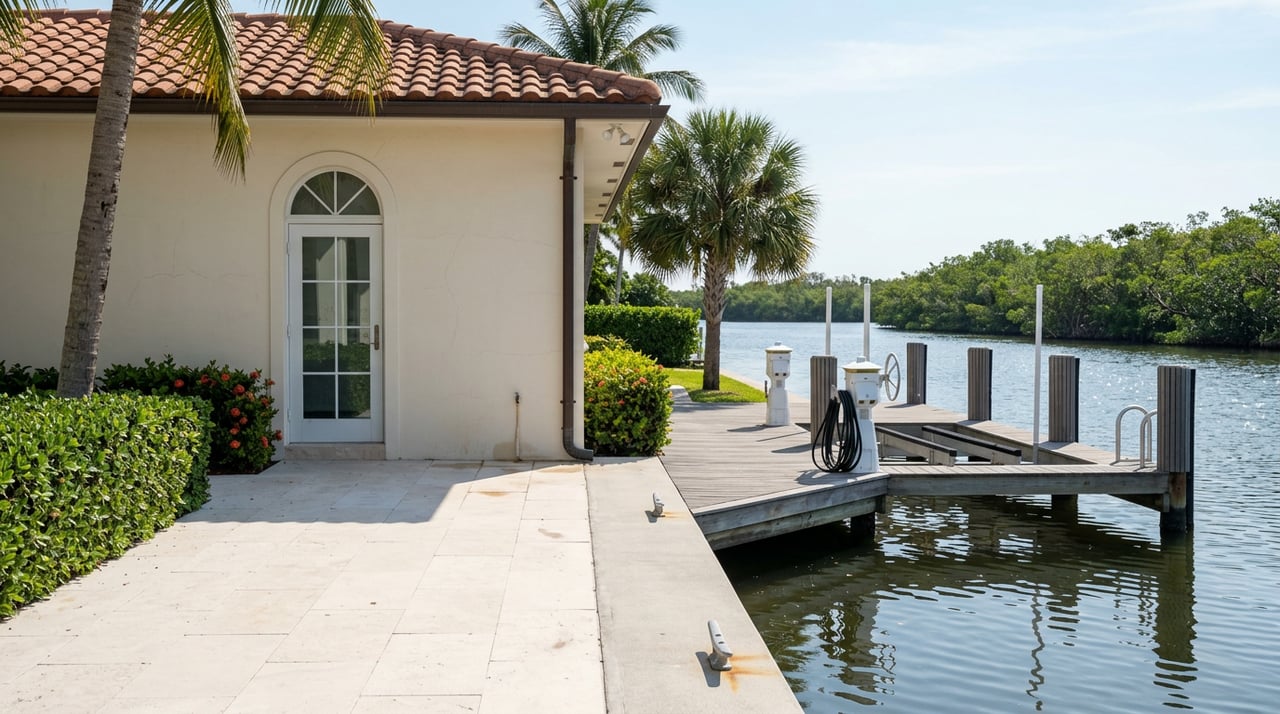
Seawall and dock condition matter to lenders and insurers. A failing or unpermitted structure can affect insurability and marketability. You may be asked to provide a seawall inspection, dock permits, or a survey showing riparian rights and easements.
Taxes, HOA, and assessments
Budget for Lee County property taxes and review HOA or POA fees. Waterfront communities can levy special assessments for seawall maintenance or dredging. Lenders will want documentation of dues and any known or pending assessments.
Insurance and deductibles
Expect higher replacement costs and hurricane deductibles. Lenders require acceptable hazard and wind coverage before closing and can place coverage if you cannot bind a policy in time.
Environmental and permitting
Coastal construction and dock work need permits. Unresolved permit issues or shoreline violations can delay or jeopardize closing. Lenders typically require clear title free of municipal or permit violations.
Cash vs financing tradeoffs
Negotiating and speed
Cash often wins in multiple‑offer situations because it removes financing uncertainty. You can usually close faster and avoid an appraisal contingency. Financing preserves flexibility and can still be strong with a sizable down payment and preapproval.
Cost of capital and opportunity cost
Compare the after‑tax cost of borrowing with the expected return on your investable assets. Consider your mortgage rate, closing costs, expected portfolio returns, and your need for capital preservation. A financial advisor can help you model scenarios.
Liquidity and reserves
Waterfront homes can carry higher maintenance risk. Financing allows you to retain liquid reserves for seawalls, docks, storm repairs, and insurance deductibles.
Appraisal gaps
Financing introduces the possibility of a low appraisal. You may need to bring additional cash or renegotiate. Cash buyers avoid this risk but might pay a premium for certainty.
Insurance and carrying costs
Regardless of payment method, plan for flood and wind premiums, HOA dues, and possible special assessments. If you will not occupy the home full‑time, factor in property management or caretaker costs.
Timing and market
During storm season, insurance binders and carrier approvals can take longer. Cash compresses timelines, while financing adds appraisal and underwriting steps. If your timing is flexible, financing can be used tactically when rate or portfolio conditions are favorable.
Asset‑depletion basics
How it works
Lenders convert eligible assets into a qualifying income stream. Two common methods are used:
- Straight depletion: The lender applies a percentage to eligible liquid assets and divides by a set number of months, or uses a withdrawal rate to calculate monthly income.
- Interest or dividend imputation: The lender uses an assumed yield on investment balances to derive monthly income.
Lenders often apply haircuts to retirement accounts to account for penalties and taxes. Not all assets qualify, and reserves are still required even when assets are used for income.
What lenders want to see
Be prepared to provide 12 to 24 months of statements for bank and brokerage accounts, plus documentation for retirement accounts. If assets are held in trusts or LLCs, you will need governing documents that prove ownership and signing authority. Some lenders still request tax returns even if you qualify through assets alone.
When to use it
Choose asset‑depletion when you have significant liquid investments but modest taxable income. If your deposits are strong but your investable balances are smaller, a bank‑statement program may be a better fit. If your income is traditional and well documented, a jumbo loan usually offers the best pricing.
Questions to compare lenders
Ask these early to align structure, speed, and costs:
- Do you offer asset‑depletion or bank‑statement qualifying? What formulas and haircuts do you use?
- What down payment and maximum LTV do you allow on second homes and waterfront properties?
- What credit score and reserve requirements apply?
- Do you allow purchases in trusts or LLCs? What documents do you require?
- Are there any special requirements for flood zones, seawalls, docks, or elevation certificates?
- Can you provide interest‑only or portfolio options? What are the rates and fees?
- What is your appraisal process for Lee County waterfront homes? Do you ever require a second appraisal?
- What is the expected timeline from application to clear‑to‑close?
- What are your rate lock terms and costs? How do you handle extensions if insurance is delayed?
- If I plan occasional seasonal rentals, how will you treat that for underwriting?
Documentation checklist
Bring originals or clean PDFs to streamline underwriting:
Identification and contract
- Government ID for each borrower.
- Executed purchase contract and all addenda.
Assets
- 12 to 24 months of bank statements for personal and business accounts.
- 12 to 24 months of brokerage and retirement account statements.
- Gift letters and donor statements if funds are gifted.
- Documentation for the source of down payment and large deposits.
Income (if using conventional income)
- Last 2 years of personal tax returns.
- W‑2s and recent paystubs, 1099s, and K‑1s as applicable.
Alternative income (if using asset‑depletion or bank‑statement)
- Cover letter explaining income sources and qualification method.
- Account statements showing balances and activity.
- Trust agreements and distribution provisions if using trust income.
Property and insurance
- Insurance declarations if available and agent contact info.
- Flood zone determination or elevation certificate if available.
- Wind mitigation inspection if available.
- HOA or POA budget, bylaws, dues, and any assessment notices.
- Existing survey, dock and seawall permits, or engineering reports.
Title and entity
- For trust or LLC purchases: trust agreement, operating agreement, EIN, certificate of incumbency, and signature authority.
- Corporate resolution if purchasing through a corporation.
Local tips for Boca Grande Isles
- Start insurance early. Coastal flood and wind coverage can take time, especially near storm season.
- Order a seawall and dock evaluation. Condition and permits can affect appraisal and insurability.
- Align the appraiser with waterfront experience in Lee County. Work through your lender to confirm eligibility.
- Verify HOA documents and capital plans. Ask about any pending seawall or dredging assessments.
- Confirm permitting history for docks, lifts, and shoreline work. Clear any open permits before closing.
- Clarify occupancy and rental intentions at the outset to avoid a surprise shift to investor terms.
Next steps
Boca Grande Isles offers a rare blend of boating access and quiet island living. The right financing strategy lets you protect liquidity, manage risk, and move with confidence when the perfect property appears. If you want a second set of eyes on loan structures, local insurance realities, or seawall and dock considerations, our team can help you assemble the right experts and chart a smooth path to close.
Ready to talk specifics for your Boca Grande Isles purchase or sale? Connect with the Steffan•Sieglaff Team for discreet, high‑touch guidance and local market insight.
FAQs
What financing works for a Boca Grande Isles second home?
- Most buyers use jumbo, portfolio, or non‑QM options, with the best fit driven by your income profile, reserves, and how you plan to use the property.
How does flood insurance affect loan approval?
- If the home is in a FEMA Special Flood Hazard Area, a lender will require flood insurance; premiums and deductibles factor into qualification and should be quoted early.
Can I buy the home in a trust or LLC?
- Many portfolio and some jumbo lenders allow trust or LLC purchases, but you will need governing documents and signature authority, and terms may differ.
What if the appraisal comes in low on a waterfront home?
- You may need to bring extra cash, negotiate with the seller, or seek a second opinion if the lender allows; cash buyers avoid this risk entirely.
When is asset‑depletion the right choice?
- It is ideal if you have substantial liquid investments but low taxable income; the lender converts assets into qualifying income using a defined formula.
How long does jumbo financing take in coastal Florida?
- Timelines vary, but underwriting can extend due to appraisal scheduling, insurance binders, and any seawall or dock documentation, so start early and stay organized.